September 11, 2026
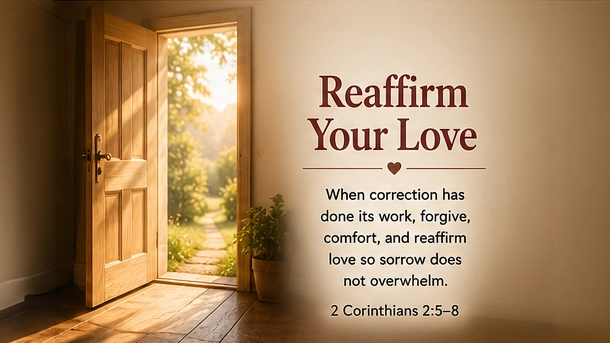
Paul tells the Corinthian church that correction has gone far enough. Now they should forgive, comfort, and reaffirm their love so that the person who has repented is not overwhelmed by sorrow.
Devotional
Sometimes Christians know how to confront wrongdoing but don’t know when to stop. We may recognize the need for correction without recognizing when correction has accomplished its purpose. When that happens, accountability can slowly become punishment.
Paul writes to a church that has already dealt with a painful situation. Correction has taken place, and consequences have been experienced. Now Paul says it is time to forgive, comfort, and reaffirm their love for the person. Restoration is an essential part of Christian accountability.
When genuine repentance has taken place, discipline cannot become a permanent identity. A person is always more than the worst thing they have done. Grace does not deny the failure, but it refuses to make that failure the final word over someone’s life.
Sometimes we say we have forgiven someone while keeping the failure close enough to bring it out during the next disagreement. We may remind the person of what happened through our words, attitudes, or refusal to trust any evidence of change. We make sure the person never forgets that we remember. In doing so, we continue to punish someone who may already be carrying deep regret.
Paul recognizes the danger in this. Too much sorrow can overwhelm a person and leave them believing that restoration is impossible. Correction should lead toward repentance, healing, and renewed faithfulness, not despair.
Grace knows when to confront, but grace also knows when to restore. This does not mean trust instantly returns to what it once was. Some consequences remain, certain responsibilities may need to be restored gradually, and healing often takes time. Forgiveness and wisdom can work together.
Still, genuine repentance should open the possibility of a new beginning. Jesus does not restore us so that our past can continue to be used as a weapon against us. He meets us with mercy, helps us rise from our failures, and gives us another way forward. Christ restores us so that grace, rather than shame, can shape what comes next.
Action
Ask yourself whether you are still making someone pay for something you say you have forgiven. If repentance has taken place, consider one way you can reaffirm love without pretending the past did not matter.
Prayer
Merciful God, thank You that You do not reduce me to my worst failure. Help me extend that same grace to others. Give me wisdom to know when accountability is still needed and when it is time to comfort, forgive, and restore. Keep me from using another person’s past as a weapon. Where repentance has taken place, help me make room for new life. In Jesus’ name, amen.
Thought for the Day
Grace does not make shame a lifelong sentence.
There comes a time when correction must give way to restoration. In 2 Corinthians 2, Paul tells the church to forgive, comfort, and reaffirm love so that a repentant person is not overwhelmed by sorrow.