“His presence does not make the hard conversation easy. His presence changes the way we have it.”
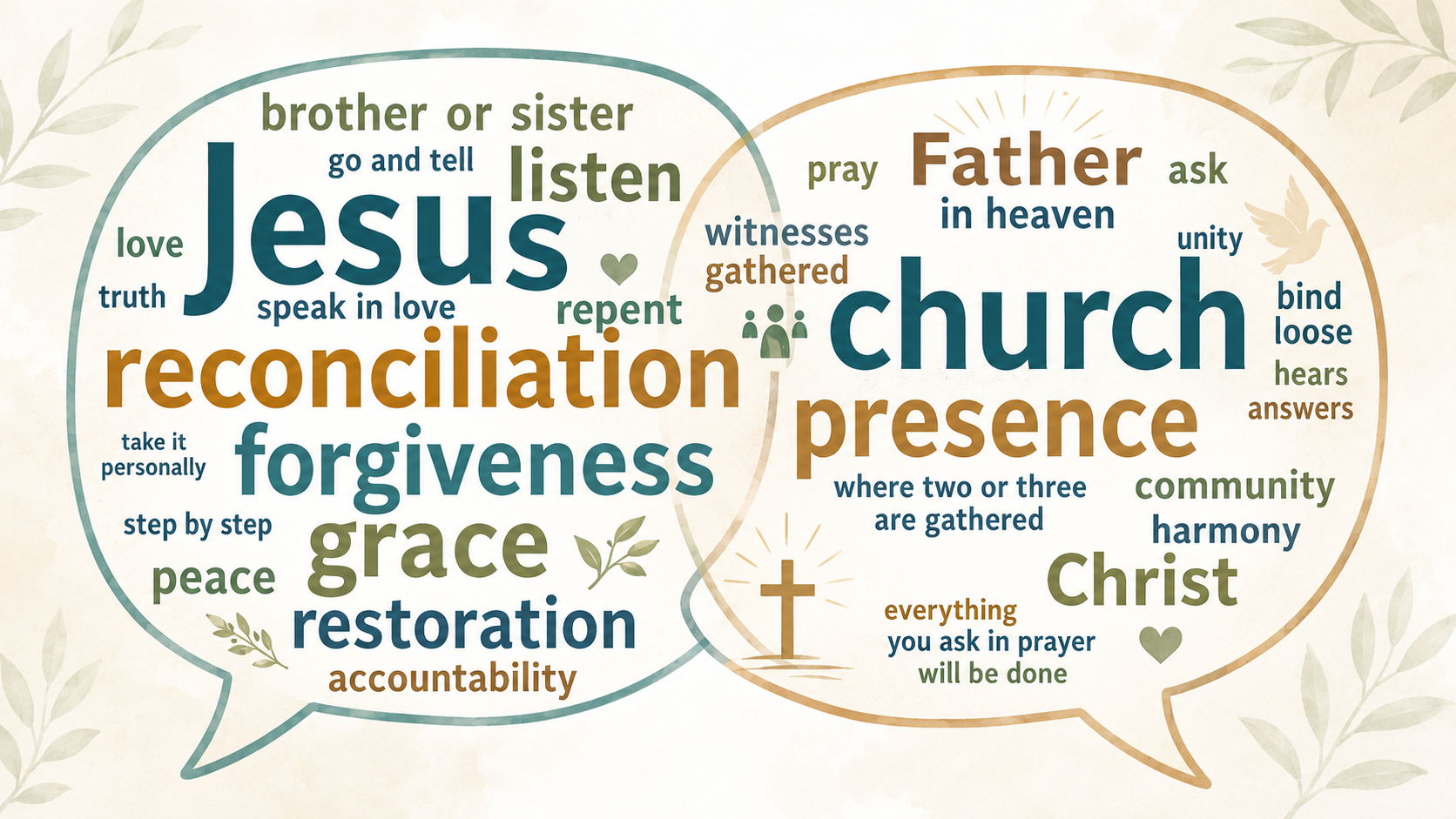
Christian community is not free from conflict. Even people who love God can misunderstand one another, speak carelessly, cause hurt, and damage relationships. In Matthew 18:15–20, Jesus does not tell His followers to ignore those moments or rush to public judgment. He teaches them to go directly to one another, speak honestly, listen humbly, and seek restoration. The goal is not to win an argument but to win back a brother or sister.
When a private conversation is not enough, Jesus brings others into the process, not to build sides but to help establish truth. Christian accountability requires people who care more about healing than victory and who love everyone involved enough to speak honestly. Grace does not mean pretending harmful behavior is acceptable, and forgiveness does not always mean trust is immediately restored. Sometimes love requires boundaries, patience, and time.
Jesus then gives one of His most familiar promises: where two or three gather in His name, He is present. In context, those people are gathered in the middle of difficult circumstances. Someone has been hurt. Someone may need to repent. Forgiveness may be hard. Christ promises to be present there too. His presence changes the way His followers speak, listen, forgive, and make difficult decisions.
That promise becomes especially meaningful at the Communion table. We do not come because every relationship is healed or because we have handled every conflict well. We come because we need grace. Christ gathers imperfect people, feeds them with mercy, and continues forming them into one body. The table invites us to bring our wounds, regrets, resentment, apologies, and unfinished relationships to Christ and receive enough grace to take the next faithful step.