“Communion is not a reward for people who have everything together. It is the Lord’s table, and the Host is the same Jesus who called Matthew, ate with sinners, stopped for the suffering woman, and entered the house of grief.”
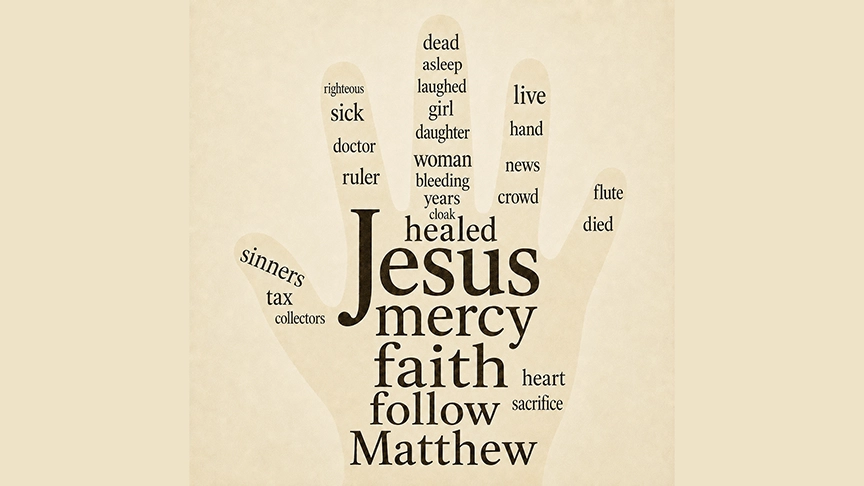
Grace at the Table reflects on Matthew 9:9–13 and Matthew 9:18–23, where Jesus meets people in the places others might avoid. He calls Matthew while he is still sitting at the tax booth, the place tied to his reputation and compromise. Jesus does not wait for Matthew to become respectable before calling him. Grace reaches him first, and Matthew responds by getting up and following.
The passage then moves to a table filled with tax collectors and sinners. The Pharisees struggle with Jesus sharing a meal with people they consider spiritually unclean, but Jesus reminds them that the sick need a doctor. He does not deny sin or pretend it does not matter. Instead, He shows that sinners are not hopeless, and mercy is at the heart of God’s desire for His people.
As Jesus walks toward a grieving home, a woman who has suffered for twelve years reaches for the edge of His cloak. Her faith is quiet, but it is real. Jesus stops, sees her, and restores her dignity as well as her body. He is not too busy for hidden pain, and He does not treat suffering people as interruptions.
The table of Communion gathers the truth of this passage into one holy meal. We come not because we have everything together, but because Christ has given Himself for us. The bread and cup remind us that grace is for sinners, sufferers, grieving hearts, and weary people who know they need Jesus. There is room at the table because mercy has made room.