November 18, 2026
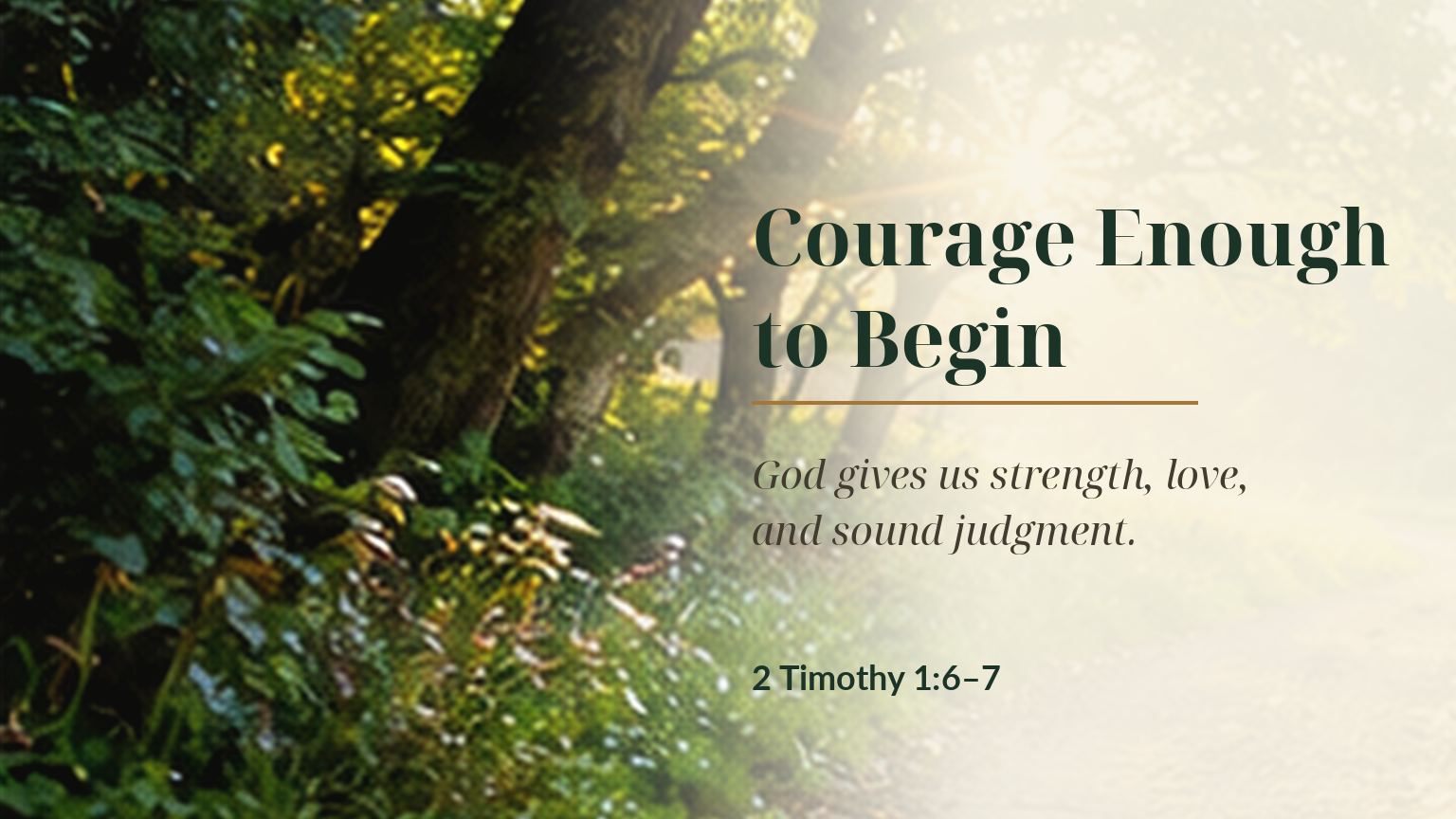
2 Timothy 1:6–7
Paul encourages Timothy to rekindle the gift God has given him and reminds him that God provides power, love, and self-discipline rather than a spirit of timidity. Timothy's calling requires courage, but he does not have to depend upon his own strength. God's presence and grace equip him to serve faithfully.
Devotional
Have you ever talked yourself out of doing something before you even tried? Maybe you considered volunteering for a responsibility at church but decided you weren't qualified. Perhaps you wanted to invite someone to worship but worried they might turn you down. Or maybe you knew you needed to have an honest conversation, but the possibility of an uncomfortable response kept you silent. Fear can be remarkably persuasive, especially when it convinces us that avoiding a difficult situation is the most reasonable choice.
Fear doesn't always announce itself for what it is. Sometimes it sounds like reasonable caution. It tells us we should wait until we're better prepared, until circumstances improve, or until somebody else takes the first step. Occasionally, those concerns are legitimate. There are times when wisdom requires patience and careful consideration. But there are also times when fear becomes an excuse for avoiding something God may be calling us to do. Learning to recognize the difference requires prayer, honesty, and a willingness to trust God beyond our own comfort.
Timothy apparently needed encouragement as he carried out his ministry. Paul reminded him to rekindle the gift he had received and to remember that God had equipped him with power, love, and self-discipline. Timothy wasn't expected to carry the responsibilities of ministry through his own ability. He could depend upon the strength God supplied. I appreciate that Paul didn't simply tell Timothy to stop being afraid. Instead, he reminded him of what God had already given him and encouraged him to put those gifts to work.
That's an important distinction because courage doesn't always mean feeling confident. Sometimes courage means taking a faithful step while we're still uncertain about what will happen. A person who offers to lead a Bible study may feel nervous about answering questions. Someone who begins a new ministry may wonder whether anybody will participate. A Christian who reaches out to repair a damaged relationship may not know whether the other person will respond. Faithfulness doesn't guarantee that those efforts will turn out as we hope, but we can trust God with our willingness to respond.
Paul also connects courage with love and self-discipline. Christian courage is never permission to act recklessly, force our opinions on others, or insist upon getting our way. God's Spirit helps us act with compassion, wisdom, and concern for the people affected by our choices. That matters because sometimes the courageous thing is to speak, while other times it is to listen. Sometimes we need to begin something new, while other times we need the humility to recognize that an existing responsibility deserves our attention. Courage guided by love seeks to honor God rather than prove something about ourselves.
Whatever the situation, God's grace provides strength for faithful living. We may not feel capable of doing everything we believe God is asking of us, and we may never reach a point when uncertainty completely disappears. Fortunately, God doesn't require us to have every answer before we begin. He asks us to trust Him, use the gifts He has given us, and remain open to His guidance along the way.
Sometimes all we need is courage enough to take the first step.
Action
Identify one responsibility or opportunity you've been avoiding because you're uncertain about the outcome. Spend time praying about it, consider what wisdom and love require, and take one reasonable step toward responding. You don't have to complete everything today. Begin with what you can do.
Prayer
Heavenly Father, You know the fears that sometimes keep us from responding to Your call. You understand our uncertainties, our limitations, and our concerns about making mistakes. Thank You for giving us the Holy Spirit to strengthen and guide us. Help us distinguish between wise caution and fear that prevents faithful action. Give us courage shaped by love, patience, and sound judgment. When we feel inadequate, remind us that Your grace is sufficient and that we never have to face our responsibilities alone. In Jesus' name, Amen.
Thought for the Day
Faithfulness doesn't require certainty about the outcome. It requires trust in the One who calls me.
Fear can convince us to wait until conditions are perfect before responding to God's call. But 2 Timothy 1:6–7 reminds us that God gives us power, love, and self-discipline. We may not know how everything will turn out, but His grace can give us courage enough to begin.