
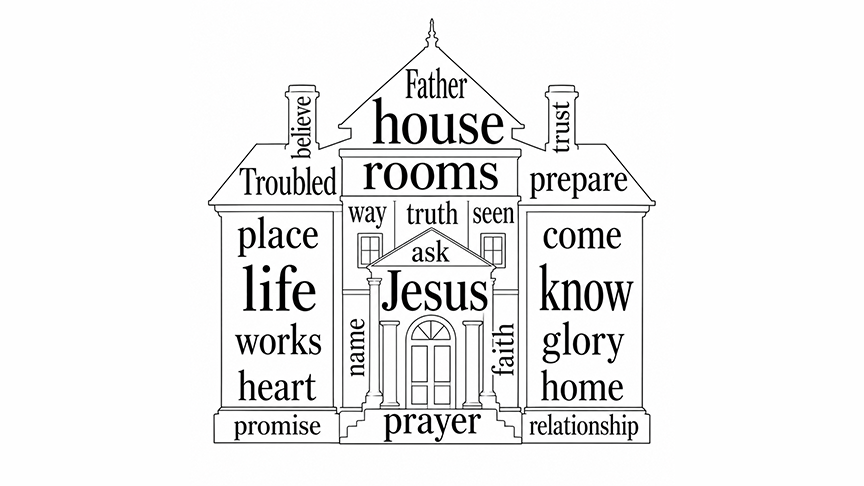
John 14:1–14 speaks into the tender place where faith and fear meet. Jesus has just told His disciples that He is going away. Judas has left the room. Peter has been told that he will deny Jesus. The air is heavy with confusion, grief, and questions no one knows how to ask. The disciples thought they were following Jesus into the full arrival of God’s kingdom, but now Jesus is talking about departure, betrayal, denial, and death. It is no wonder their hearts are troubled.
Into that fear, Jesus says, “Do not let your hearts be troubled.” He does not say this because trouble is imaginary. He says it because trouble is not ultimate. The disciples are not being asked to pretend everything is fine. They are being invited to trust Him when nothing feels fine. John’s Gospel often shows faith growing in the middle of misunderstanding, and this passage is one of the clearest examples. The disciples do not yet understand where Jesus is going, how they will follow, or what His death will mean, but Jesus keeps calling them back to trust (Keener).
Jesus comforts them with the promise of His Father’s house. The phrase does not point to a vague heavenly idea but to lasting communion with God. Jesus is going to prepare a place, and He promises to come back and take His people to be with Him. The heart of the promise is not architecture. It is relationship. “That you also may be where I am” is the center of the comfort. Heaven matters because Jesus is there, and salvation means being brought home to the Father through the Son (Morris).
Thomas asks the honest question many people still carry, “Lord, we don’t know where you are going, so how can we know the way?” Jesus answers with one of the strongest claims in Scripture, “I am the way and the truth and the life.” This is not arrogance. It is grace. Jesus does not simply point toward God. He brings us to God. He does not hand the disciples a map and tell them to figure it out. He gives them Himself. In a world full of spiritual confusion, Jesus makes the way personal, trustworthy, and open to all who will receive Him (Köstenberger).
Origin and Name
The Gospel takes its name from John, traditionally understood to be John the son of Zebedee, one of the twelve disciples. From the earliest centuries of the church, this Gospel has been connected with the beloved disciple who stood close to Jesus and bore witness to Him. The name fits the book’s deeply personal and reflective character, where memory, testimony, and theology work together to show who Jesus is (Morris).
Authorship
Early Christian tradition strongly links this Gospel to John, though many scholars note that the final form of the book likely reflects both apostolic witness and careful shaping within the Johannine community. What matters most for interpretation is that the Gospel presents itself as grounded in eyewitness testimony and written with theological purpose, not as detached speculation or legend (Köstenberger).
Date and Setting
John was likely written near the end of the first century, often dated around AD 90, though some place it a bit earlier. It emerged in a setting where believers in Jesus were increasingly facing tension with synagogue communities and living under Roman power. That setting helps explain John’s concern with witness, rejection, identity, and the need to remain faithful in the face of opposition (Keener).
Purpose and Themes
John states his purpose clearly, that readers may believe Jesus is the Messiah, the Son of God, and by believing have life in His name. Major themes include belief and unbelief, light and darkness, truth and falsehood, eternal life, the identity of Jesus, and the intimate relationship between Jesus and the Father. John keeps pressing one central question, who is Jesus, really? (O’Day).
Structure
The Gospel is often understood in broad movements. The opening prologue announces the Word made flesh. The “Book of Signs” shows Jesus through His public ministry and signs. The “Book of Glory” turns toward His death, resurrection, and exaltation. John 10 falls within the public ministry section, where Jesus’ words and works steadily reveal both His identity and the divided response to Him (Moloney).
Significance
John stands as one of the clearest biblical witnesses to the divinity of Christ and the gift of life through Him. It gives the church language for worship, discipleship, and assurance. Again and again, John shows that to know Jesus is to know the Father and to enter the life God intends for His people (Morris).
John 14:1–14 comes during Jesus’ final meal with His disciples. In John 13, Jesus washes their feet, teaches them the shape of humble love, identifies Judas as the betrayer, gives the new commandment to love one another, and tells Peter that he will deny Him. John 14 responds to the emotional weight of all of that. The disciples are shaken, so Jesus anchors them in trust.
Within John’s Gospel, this passage deepens what has already been revealed. John 1 says that no one has ever seen God, but the Son has made Him known. John 10 says Jesus and the Father are one. John 14 brings those truths into the Upper Room and makes them pastoral. To know Jesus is to know the Father. To see Jesus is to see the Father. This does not make Jesus a lesser messenger of God. It reveals Him as God’s own self-disclosure in human flesh (O’Day).
Within the wider biblical story, John 14 echoes Israel’s longing for God’s presence. In Exodus, Moses asks to see God’s glory. In the Psalms, the faithful long to dwell in the house of the Lord. In the prophets, God promises to gather His people and bring them home. Jesus gathers all of that longing into Himself. He is the presence of God with us, the way into fellowship with the Father, and the One who prepares the place we could never secure for ourselves (Keener).
This passage also prepares the way for Pentecost and the mission of the Church. When Jesus says His followers will do “greater works,” He does not mean they will surpass Him in power or importance. He points to the wider reach of His work after His resurrection, through the Spirit-filled witness of His people. The ministry that began in Galilee and Judea will move outward to the nations (Köstenberger).
John Wesley would have heard strong notes of grace, assurance, and holiness in this passage. Jesus begins with comfort, not command. “Do not let your hearts be troubled” is spoken to disciples who are confused, weak, and about to fail Him. Peter will deny Him. The others will scatter. Yet Jesus still promises them a place in the Father’s house. Grace reaches them before they have proven themselves faithful.
That fits the Wesleyan understanding of prevenient grace. God’s grace comes before our response, awakens faith, and makes trust possible. The disciples do not understand everything, but Jesus does not withdraw His promise. He keeps calling them into faith. Their hope rests not in the strength of their comprehension but in the faithfulness of Christ (Collins).
Wesley also emphasized assurance, the Spirit-given confidence that we belong to God. John 14 gives that assurance through the promise of Christ Himself. Jesus does not say, “Maybe there is a place for you.” He says He goes to prepare a place and will come back for His own. Christian assurance is not self-confidence dressed up in religious language. It is confidence in the love, mercy, and promise of Jesus.
This passage also speaks to holiness. Jesus is the way, not only the doorway to heaven someday but the path of life now. To follow Him means learning to live in the truth and life He reveals. Wesleyan holiness is not cold moralism. It is love of God and neighbor formed in us by grace. If Jesus reveals the Father, then His mercy, humility, truth, and self-giving love show us what holy life looks like (Wesley).
Prayer also matters here. Jesus promises that His followers may ask in His name. Wesley would not have treated this as a blank check for selfish desire. To pray in Jesus’ name means to pray in union with His character, His mission, and His will. Prayer draws believers into the life and work of Christ, so that God may be glorified through the Son (Collins).
John 14:1–4, Trust in the Middle of Trouble
Jesus begins, “Do not let your hearts be troubled.” The word “heart” in Scripture often refers to the center of a person’s will, thought, emotion, and trust. Jesus is not scolding the disciples for feeling sorrow. He is calling them to place their fear inside a larger trust. “You believe in God; believe also in me.” Faith in the Father and faith in the Son belong together because Jesus shares the Father’s identity and reveals the Father’s heart (Morris).
Jesus then speaks of His Father’s house. The “many rooms” are sometimes pictured as mansions, but the better idea is dwelling places. The promise is spacious enough for all who belong to Christ. There is room in the Father’s house because the Son makes room. Jesus’ departure is not abandonment. It is preparation. He goes through the cross, resurrection, and ascension to bring His people into the life of God (Keener).
The comfort reaches its deepest point in verse 3, “I will come back and take you to be with me.” The promise is personal. Jesus does not simply prepare a destination. He promises His presence. The Christian hope is not floating somewhere beyond pain. It is being with Christ. That hope does not remove grief from the room, but it keeps grief from having the final word.
John 14:5–7, Jesus Is the Way, the Truth, and the Life
Thomas gives voice to honest confusion. He does not pretend to understand. He says, “Lord, we don’t know where you are going, so how can we know the way?” Thomas is often remembered for doubt, but John shows him asking the question that opens the door to one of Jesus’ clearest revelations. Sometimes honest questions become holy ground.
Jesus answers, “I am the way and the truth and the life.” Each word matters. Jesus is the way because He brings sinners to the Father. He is the truth because He reveals God as God truly is. He is the life because eternal life comes through Him and begins in relationship with Him now (Köstenberger). Christianity is not built on advice alone. It is built on the person of Jesus Christ.
Then Jesus says, “No one comes to the Father except through me.” This claim is exclusive, but it is not cruel. It is exclusive because Jesus alone reconciles humanity to God. It is gracious because the invitation goes out to the world. John 3:16 says God loved the world, not a select religious club. John 12:32 says Jesus will draw all people to Himself. The way is narrow because it is Christ, but the invitation is wide because God’s love reaches toward all creation (O’Day).
John 14:8–11, Seeing the Father in the Son
Philip says, “Lord, show us the Father and that will be enough for us.” It is a deeply human request. Many people still say some version of it. “God, just show me clearly. Give me proof. Let me see enough, and then I’ll trust.” Philip wants access to God apart from the mystery of what Jesus is about to endure.
Jesus responds with both tenderness and correction. “Don’t you know me, Philip, even after I have been among you such a long time?” The Father is not hidden behind Jesus. The Father is revealed in Jesus. “Anyone who has seen me has seen the Father.” This is one of the strongest statements in John’s Gospel about the unity of Father and Son (Morris).
Jesus points to His words and works. His teaching does not come from Himself alone, and His works are the Father’s works being done through Him. The healings, signs, mercy, truth, table fellowship, foot washing, and coming cross all reveal the character of God. If we want to know what God is like, we look at Jesus. Not at our fears. Not at distorted religious pictures. Not at the harshest voice in the room. We look at Jesus.
John 14:12–14, The Works of Jesus and Prayer in His Name
Jesus then says something startling, “Whoever believes in me will do the works I have been doing, and they will do even greater things than these.” This does not mean disciples become greater than Jesus. It means Jesus’ mission will continue and spread after He goes to the Father. Through the Spirit, the Church will carry the gospel beyond the boundaries of Jesus’ earthly ministry. The book of Acts shows this promise unfolding as the good news moves from Jerusalem to Judea, Samaria, and the ends of the earth (Keener).
The “greater works” are tied to Jesus’ departure. His death, resurrection, ascension, and sending of the Spirit open a new chapter in God’s redemptive work. Ordinary believers become witnesses. Frightened disciples become bold proclaimers. Communities form around grace, forgiveness, baptism, teaching, prayer, and shared life. The work of Jesus continues through people who could never produce it on their own (Köstenberger).
Jesus also promises, “I will do whatever you ask in my name.” Praying in Jesus’ name is not adding the right phrase to the end of a prayer so God has to say yes. It means praying under the authority of Jesus, in the character of Jesus, and for the purposes of Jesus. The goal is clear, “so that the Father may be glorified in the Son.” Prayer is not a way to use God. It is a way to abide in Christ’s mission and depend on His power (Wesley).
John 14:1–14 answers several questions people still ask. Is Christian faith only wishful thinking in the face of death? Jesus’ words say no. The comfort He gives is tied to His coming death and resurrection, not denial of suffering. He speaks hope on the edge of the cross. Christianity does not avoid death. It claims that Jesus passes through death and opens the way to life.
The passage also addresses the question of whether Jesus is merely a teacher. His words leave little room for that. He does not say, “I know a way.” He says, “I am the way.” He does not say, “I can tell you some truth.” He says, “I am the truth.” He does not say, “I can improve your life.” He says, “I am the life.” John presents Jesus as the full revelation of God, not one religious voice among many equal options (Morris).
Some people struggle with the exclusivity of John 14:6, and that concern deserves a thoughtful response. The verse does not teach that Christians are better than anyone else. It teaches that Jesus is the Savior everyone needs. Salvation is not earned by religious superiority, moral achievement, or church membership. It is received through Christ. The same Gospel that says no one comes to the Father except through Jesus also says God loves the world and sent the Son to save it (O’Day).
The passage also speaks to the reliability of Christian hope. Jesus grounds hope in His relationship with the Father, His coming resurrection, and His continued work through the disciples. This is not vague optimism. It is trust rooted in the identity and promise of Christ.
Many people know what it feels like to have a troubled heart. Sometimes trouble comes from grief. Sometimes it comes from change, fear, disappointment, conflict, illness, or uncertainty about the future. Jesus does not shame troubled hearts. He speaks to them. He invites them to trust Him when they cannot see the whole road.
This passage reminds us that faith is not the same as having every answer. Thomas did not understand. Philip wanted more proof. Peter was about to fail. Still, Jesus kept speaking promise over them. That matters because discipleship is not built on our perfect understanding. It is built on the faithfulness of Jesus.
John 14 also calls us to keep Christ at the center. In a noisy world, many voices claim to offer the way, the truth, and the life. Some promise success. Some promise control. Some promise escape. Jesus offers Himself. He is not one more technique for managing anxiety. He is the Savior who brings us to the Father.
For the Church, this passage is also a call to continue the works of Jesus. We do not do that by our own strength. We do it through prayer, obedience, love, witness, mercy, and dependence on the Spirit. The same Jesus who prepares a place for His people also sends His people into the world with purpose.
Grace is written all through this text. There is room in the Father’s house. There is a way to the Father. There is truth for confused minds. There is life for weary souls. There is work for ordinary disciples. And all of it comes through Jesus.
Exodus 33:18–23
Psalm 23:6
Psalm 27:4
Isaiah 43:1–2
John 1:14–18
John 3:16–17
John 10:30
John 13:33–38
Acts 1:8
Acts 4:12
Romans 8:34–39
Hebrews 10:19–22
1 Peter 1:3–5
Revelation 21:1–4
