
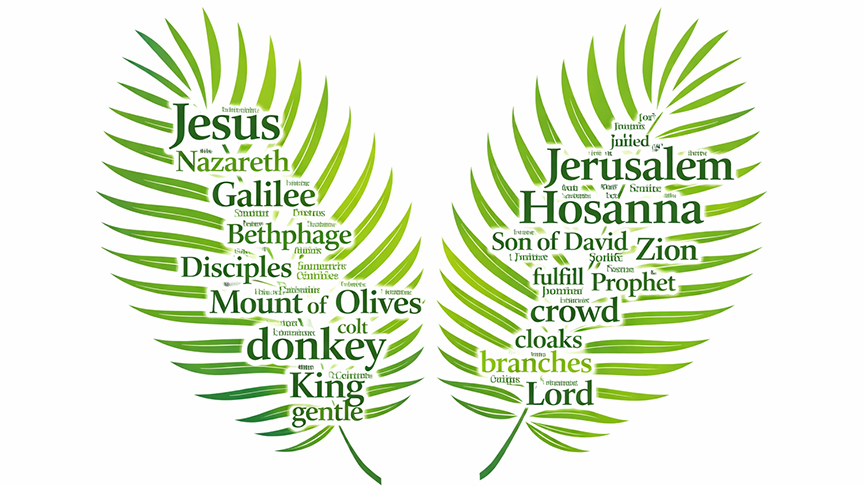
 Matthew 21:1–11 opens with movement, tension, and expectation. Jesus is approaching Jerusalem, the city where prophets have spoken, kings have ruled, and conflict will soon reach its peak. The scene feels celebratory on the surface, but Matthew wants us to see more than a parade. This is a revelation of who Jesus is and what kind of king He has come to be. He enters the city not on a war horse but on a donkey, not with military force but with humility. The crowd shouts “Hosanna,” hoping for deliverance, but many still misunderstand the shape that deliverance will take. They want a rescuer, and Jesus is that, but not in the way they expect (France).
This passage matters because it shows that Jesus does not drift into Jerusalem by accident. He comes intentionally, fulfilling Scripture and presenting Himself publicly as the promised King. Matthew ties the moment to Zechariah 9:9, where Zion’s king comes gentle and riding on a donkey. That image would have stood in sharp contrast to the displays of imperial power people knew from Rome. Earthly rulers made entrances to intimidate. Jesus enters to save. He embodies authority, but it is the authority of peace, righteousness, and self-giving love rather than domination (Keener).
The setting also matters. Jesus is coming from the Mount of Olives toward Jerusalem during Passover season, a time when the city would have been crowded with pilgrims remembering God’s deliverance from Egypt. Hopes for liberation ran high. In that climate, every symbolic action carried weight. Jesus’ entry announces that God’s kingdom is drawing near in a decisive way, but Matthew shows that the kingdom will not come through violence or political spectacle. It comes through the Messiah who fulfills God’s promises with humility and purpose (Wright).
Origin and Name
The Gospel takes its name from Matthew, also called Levi, the tax collector whom Jesus called into discipleship. That detail still matters because Matthew’s own story reflects the grace of Christ. A man many would have dismissed becomes the one whose Gospel shows again and again that Jesus is the fulfillment of Israel’s hope and the Savior who welcomes the outsider (France).
Authorship
Early church tradition identifies Matthew as the author of this Gospel. While scholars discuss how the Gospel was composed and what sources may have been used, the text itself carries a distinctly Jewish texture, deep familiarity with Scripture, and a strong concern to show that Jesus fulfills the story of Israel. Its theological voice is careful, structured, and pastoral, helping the church understand who Jesus is and what faithful discipleship looks like (Keener).
Date and Setting
Matthew was likely written between AD 70 and 90, after the destruction of the Jerusalem temple. That was a painful and disorienting period for Jewish communities and for Jewish Christians. Questions about identity, authority, and the future were pressing. Matthew writes into that setting by presenting Jesus as the true Messiah, the one in whom God’s purposes have not failed but have come to fulfillment (Davies and Allison).
Purpose and Themes
Matthew presents Jesus as the promised Messiah, the Son of David, the new Moses, and the one who brings the kingdom of heaven near. Major themes include fulfillment of Scripture, discipleship, righteousness, judgment, mercy, and the widening reach of God’s saving work.
Structure
The Gospel combines narrative and teaching, moving through key scenes in Jesus’ life and ministry and arranging much of His teaching into five major discourse sections. This pattern gives the book both story and instruction.
Significance
Matthew stands as a bridge between the Old Testament and the New. It shows that Jesus does not discard God’s promises to Israel but fulfills them, deepens them, and carries them forward.
Matthew 21:1–11 marks a major turning point in the Gospel. Jesus has taught, healed, confronted opposition, and prepared His disciples. Now He enters Jerusalem publicly as king. This event begins what we often call Passion Week. The joy of the crowd stands side by side with the shadow of the cross. In Matthew’s larger structure, this is the moment when Jesus’ identity becomes unmistakably public and the conflict around Him sharpens. He is no longer moving quietly through Galilee. He is entering the heart of religious and political tension on purpose (Davies and Allison).
Within the wider biblical story, this passage pulls together several threads. It echoes Zechariah’s vision of a humble king, evokes royal hopes tied to David, and places Jesus in the stream of God’s covenant faithfulness. The cry “Hosanna to the Son of David” signals messianic expectation. Yet Matthew also shows that Jesus redefines kingship itself. He is the true King, but His throne will not be secured by force. It will be revealed most fully through suffering love. This makes the triumphal entry both celebration and correction. God’s people are right to hope for salvation, but they must learn to recognize salvation when it arrives in humble form (Wright).
A Wesleyan reading of this passage sees grace at work not only in individual hearts but in the public revelation of Christ. Jesus comes near to the city before the city fully understands Him. That is prevenient grace. He does not wait until Jerusalem is ready. He enters anyway, offering peace to people who are confused, divided, and spiritually restless. The crowd may not grasp the whole truth, but grace is already moving among them. Wesley understood that God acts before we fully understand, awakening, drawing, and inviting us toward salvation (Collins).
This passage also speaks to holiness. Jesus is king, but His kingship is marked by meekness, not pride. That matters for Christian discipleship. Wesley taught that holiness is not harshness or self-importance. It is Christlikeness. It takes shape in humility, obedience, and love. Jesus does not come to crush people into submission. He comes to save them, and He does so in a way that exposes the emptiness of worldly power. For Wesleyans, this means discipleship must reflect the character of the King. If we claim to follow Jesus, then humility, mercy, and surrendered obedience must mark our lives too (Collins).
Matthew 21:1–3, The Preparation for the King’s Arrival
As Jesus nears Jerusalem, He sends two disciples to fetch a donkey and its colt. The instructions are precise, which shows intentionality rather than improvisation. Jesus knows what He is doing. He is arranging a symbolic act that will reveal His identity. His statement, “The Lord needs them,” carries quiet authority. He is not a helpless figure being swept along by events. He moves toward Jerusalem with full purpose (France).
Matthew 21:4–5, Fulfillment of Prophecy
Matthew immediately links this action to prophecy, quoting from Zechariah 9:9 with echoes of Isaiah. His concern is clear, Jesus’ entry fulfills Scripture. The king comes “gentle” and mounted on a donkey. This is not weakness. It is a different kind of strength. Jesus rejects the imagery of conquest that people expected from rulers. He comes in peace, but He still comes as king. Matthew wants readers to see that humility and authority are not opposites in Jesus. They belong together (Keener).
Matthew 21:6–8, The Crowd’s Response
The disciples obey, and the crowd responds with honor. They spread cloaks and branches on the road, gestures associated with royal welcome and celebration. Their actions show hope and enthusiasm. Still, Matthew lets us feel the tension. The crowd is saying true things about Jesus, but they may not understand the full weight of what they are saying. They welcome Him as a king, yet many likely imagine political liberation more than redemptive sacrifice (Davies and Allison).
Matthew 21:9, Hosanna to the Son of David
The cry “Hosanna” means something like “save, please” or “save now.” Over time it also became a shout of praise, but its roots are in pleading for deliverance, especially from Psalm 118. By calling Jesus “Son of David,” the crowd gives Him a messianic title. This is one of the clearest public acknowledgments of Jesus’ royal identity in Matthew. Yet the irony runs deep. They are calling for salvation, and salvation is indeed arriving, but it will come through the cross rather than revolt. Jesus is the king they need, though not the king many expected (Wright).
Matthew 21:10–11, The City Is Stirred
When Jesus enters Jerusalem, the whole city is stirred and asks, “Who is this?” That question hangs over the whole Gospel. The crowd answers, “This is Jesus, the prophet from Nazareth in Galilee.” The answer is true, but incomplete. He is a prophet, yes, but He is more than a prophet. Matthew leaves the question ringing because the rest of the Passion narrative will answer it more fully. Jerusalem is shaken by His presence, and every reader is invited to decide who Jesus truly is (France).
This passage gives us good reason to take the Gospel account seriously as history-shaped theology rather than religious fantasy. The text names real locations, draws from known Jewish expectations, and reflects recognizable first-century practices tied to pilgrimage and messianic hope. Jesus’ entry into Jerusalem makes sense within the political and religious climate of Passover, where public symbols would carry enormous meaning. Matthew is not writing vague spiritual ideas detached from life. He is presenting Jesus in a concrete setting where claims could be understood, tested, and opposed (Keener).
Theologically, the passage also shows coherence across Scripture. Zechariah’s vision of a humble king is not forced into the scene after the fact. It fits the character of Jesus and the kind of kingdom He consistently proclaimed. Philosophically, the triumphal entry confronts our assumptions about power. Human beings often trust strength that dominates, spectacle that impresses, and leaders who force outcomes. Jesus presents a different vision. He reveals that true authority can wear humility without losing strength. That is not only biblically compelling, it speaks directly to the human need for a ruler who saves without destroying (Wright).
This passage still speaks clearly today because we also struggle with recognizing Jesus on His terms instead of our own. We want help, but often on our timetable and in our preferred form. We want the King to solve our problems while leaving our expectations untouched. Matthew 21 reminds us that Jesus comes as He is, not as we try to remake Him. He is holy, humble, and determined to save. The question is whether we will welcome Him only when He fits our plans, or whether we will follow Him when His way looks different from what we expected.
It also reminds us that humility is not weakness. In a world that often celebrates noise, domination, and self-promotion, Jesus shows another way. Strength under God’s direction does not need spectacle. Faithfulness does not need swagger. The King rides in on a donkey, and heaven still calls Him King. That ought to shape the church. We don’t bear witness best when we imitate the world’s hunger for control. We bear witness best when we reflect the character of Christ, steady, obedient, humble, and full of truth.
And there is comfort here too. Jesus does not avoid the city that will reject Him. He enters it. He comes toward the place of pain, conflict, and sacrifice because that is what love does. So when our lives feel stirred up, uncertain, or heavy with tension, this passage reminds us that Jesus is not absent from hard places. He moves toward them with purpose and grace.
Zechariah 9:9
Psalm 118:25–26
Isaiah 62:11
John 12:12–16
Philippians 2:5–11
Revelation 7:9–10
